
Do Not Just Output Prompts
Production packets, ordered visual routes, plan-graph approval, and repair-aware generative media
Abstract
Generative-media tools commonly collapse direction, references, timing, provider choice, cost, and continuity into one prompt. The Glyphd media corpus instead treats the unit of work as a production packet: a versioned, inspectable object containing visual doctrine, reference roles, scene timing, shot beats, camera and sound rules, model/provider route, cost estimate, negative constraints, continuity locks, review rubric, and repair plan. Ordered Omni sequence sheets provide a low-bandwidth visual route for models that respond to image reference order. No render begins until the user approves the Video Plan Node Graph.
Abstract
A text prompt is an impoverished production object. It rarely captures reference roles, timing, shot order, camera behavior, continuity, provider capabilities, cost, review criteria, or the plan for repairing a failed render.
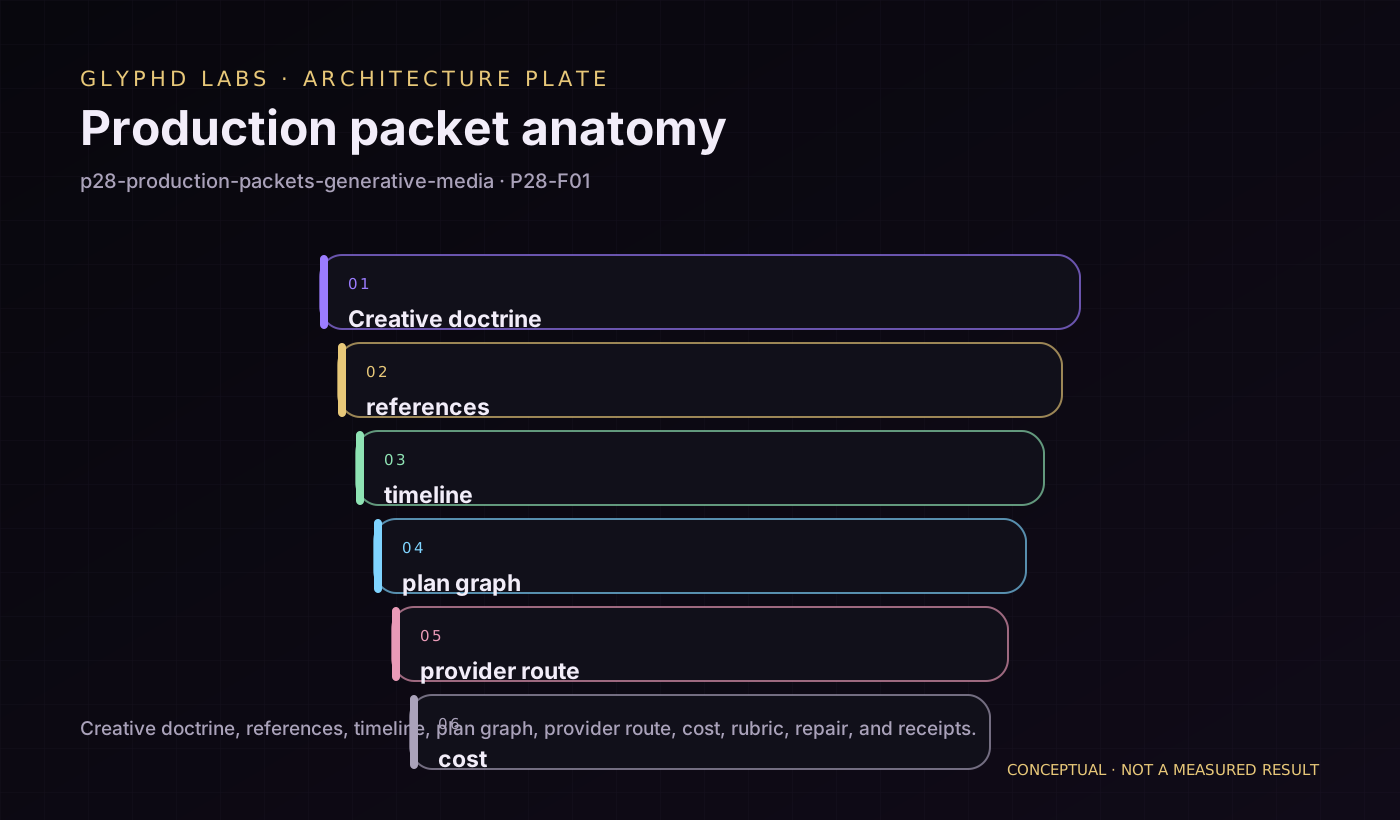
The Glyphd audiovisual research program proposes a stronger unit: the production packet. A packet is a versioned, inspectable object that combines creative direction with executable production constraints. It can contain a short prompt, full prompt, reference order, asset-role map, model recommendation, provider lane, duration, aspect ratio, resolution, shot beats, camera and sound rules, negative constraints, continuity locks, cost estimate, first-render rubric, and second-render repair plan.
The system's directing law is:
Do not just output prompts. Output production packets.
A complementary visual control object, the Omni sequence sheet, presents ordered image states on one 16:9 reference plate so a video model can infer scene progression, camera path, continuity, and landing frame. Both mechanisms remain testable rather than assumed.
1. Prompting is not production
A finished media result depends on decisions that are poorly represented by one paragraph:
- what each reference controls;
- which identity must remain stable;
- how the scene changes over time;
- where the camera moves;
- what cannot appear;
- which provider can satisfy the job;
- what the render should cost;
- how the first attempt will be judged;
- how local defects will be repaired.
When these decisions are implicit, every rerun becomes a fresh interpretation.
2. Production packet anatomy
ProductionPacket {
  project_ref
  creative_doctrine
  subject_and_character_refs[]
  asset_role_map[]
  timeline
  shot_beats[]
  camera_rules[]
  sound_rules[]
  continuity_locks[]
  negative_constraints[]
  model_and_provider_route
  duration_aspect_resolution
  estimated_cost
  prompt_short
  prompt_full
  approval_state
  first_render_rubric
  repair_moves[]
  output_and_receipt_contract
}
The packet is readable by the creator and executable by the production system.
3. Reference roles
A reference image should not merely be attached. Its role is declared:
IDENTITY
WARDROBE
ENVIRONMENT
LIGHTING
CAMERA
COMPOSITION
TEXTURE
MOTION
FINAL_LANDING_FRAME
The packet records precedence and conflict rules. An environment reference cannot silently replace the locked character identity. A lighting reference cannot rewrite architecture unless the role permits it.
4. Ordered Omni sequence sheets
An Omni sequence sheet is a simple 16:9 plate containing a small number of large, clearly ordered panels.
Recommended counts vary by duration:
5 seconds  → 3–5 states
10 seconds → 4–8 states
15 seconds → 6–15 states
The design is intentionally plain:
- huge sequence numbers;
- obvious order;
- one state per panel;
- minimal text;
- legible as a thumbnail.
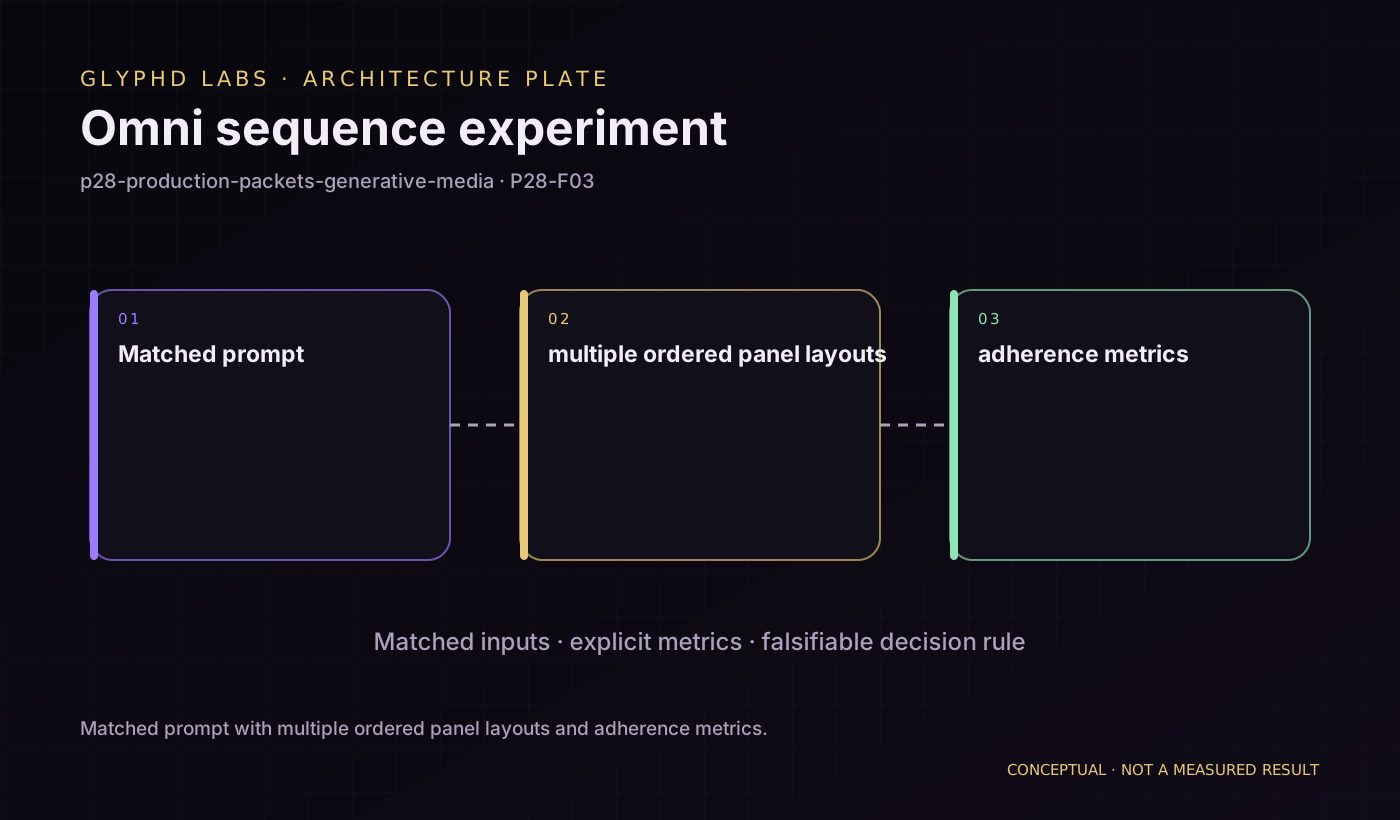
The sheet tests whether the model follows:
- panel order;
- camera path;
- final landing image;
- continuity locks;
- no-text and no-extra-subject constraints.
The prompt and subject remain fixed while layout or order changes. That isolates the visual routing effect.
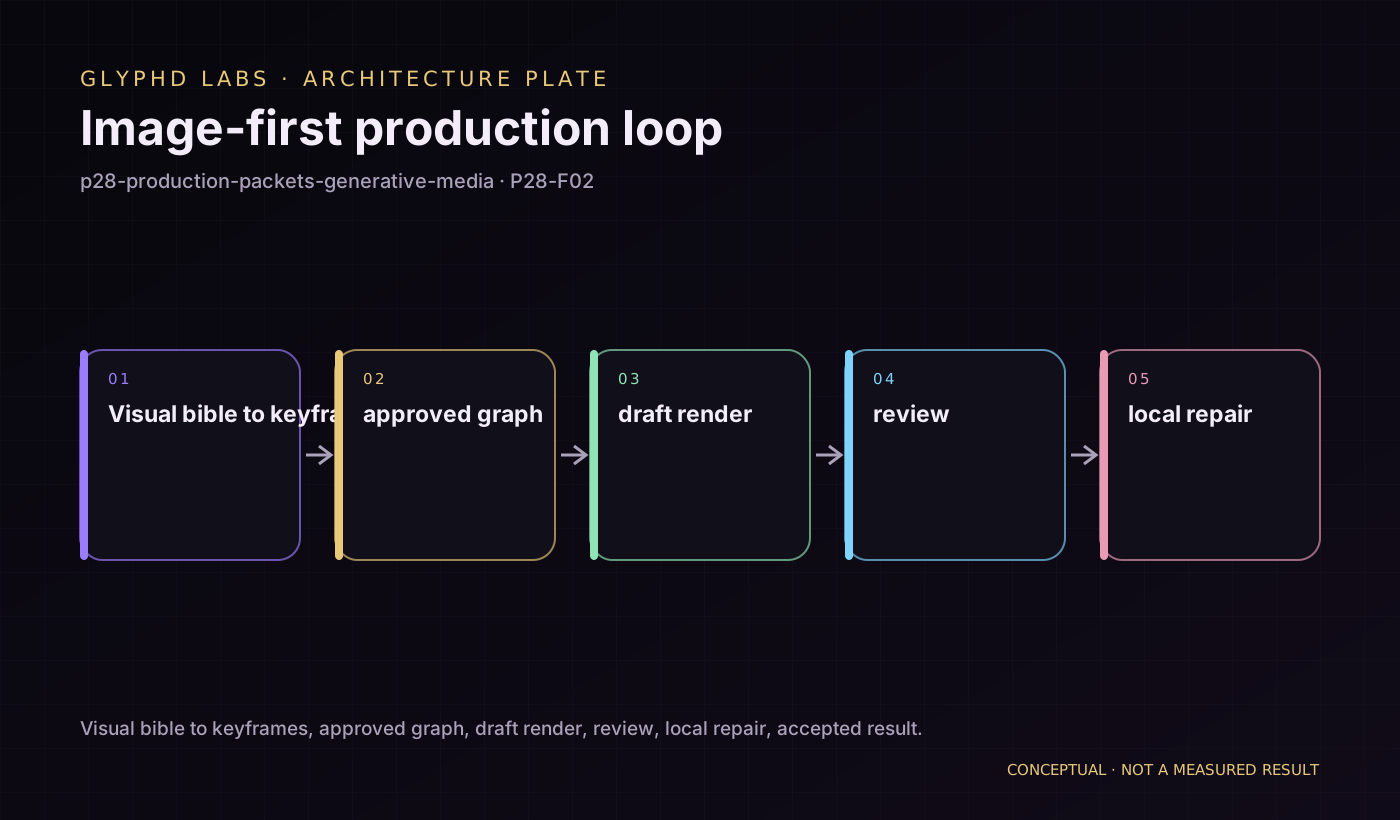
5. Image-first workflow
The production sequence is:
visual bible
→ character and environment references
→ timestamped scene list
→ section storyboard
→ keyframe goals
→ approved Video Plan Node Graph
→ draft animation
→ review
→ local repair
→ final render
The system does not jump from a loose idea to a long final video. It establishes stable images and only animates when the visual world is coherent.
6. Plan-graph approval
No render begins until the user sees and approves the Video Plan Node Graph.
The graph exposes:
- scenes and shots;
- dependencies;
- reference bindings;
- provider route;
- estimated cost;
- duration and settings;
- continuity risks;
- approval state.
This separates creative exploration from consequential spend.
7. Production Skills
A Production Skill is a versioned, inspectable contribution to a packet. It is more than a prompt fragment.
A skill may supply:
- creative doctrine;
- required inputs;
- reference strategy;
- shot structure;
- provider recommendations;
- negative constraints;
- cost implications;
- review rubric;
- repair moves.
Initial skill families include creative styles, provider profiles, reference mapping, prompt shortening, shot compilation, cost routing, continuity locking, render review, and report packaging.
The registry begins small and curated. It is not an unbounded plugin marketplace.
8. Provider-independent routing
The creator describes intent, quality, budget, references, and risk. The system recommends a lane. The front door does not require the user to choose a model before the production problem is understood.
A provider profile declares:
capabilities
reference limits
supported duration
resolution
latency
cost
known failure modes
privacy/locality
receipt behavior
The route remains replaceable. Provider names and availability change; the packet's semantic intent and evidence survive.
9. Cost Shield
Before rendering, the packet shows:
- provider and model;
- estimated credits or currency;
- confidence range;
- duration and resolution;
- draft versus final lane;
- retry exposure;
- approval requirement.
Changing a plan updates the estimate without initiating a generation call.
10. Review and repair
The first render is evidence, not finality. The rubric may score:
- identity stability;
- camera adherence;
- sequence adherence;
- composition;
- text contamination;
- extra subjects;
- motion plausibility;
- continuity;
- landing frame;
- sound posture.
Repair is local where possible:
- replace one keyframe;
- shorten one shot;
- simplify a creature or prop;
- strengthen reference priority;
- fix lighting transfer;
- reroute one segment;
- adjust the sequence sheet.
The system does not regenerate an entire piece merely because one section drifted.
11. Receipts and lineage
Every output records:
- packet version;
- approved plan;
- provider/model/settings;
- reference digests and roles;
- prompts;
- actual cost;
- returned assets;
- review results;
- repairs;
- accepted artifact version.
A later production can reproduce the packet, compare provider behavior, or reuse selected assets without reconstructing the original session.
12. Evaluation
Sequence-sheet experiment
Hold subject and prompt fixed. Vary panel count, order, and layout. Measure:
- intended beat order;
- camera-path adherence;
- final-frame adherence;
- identity continuity;
- extra-subject/text violations;
- human preference;
- sensitivity to provider.
Packet-versus-prompt experiment
Compare:
- A: one prompt;
- B: same creative intent compiled into a production packet.
Measure first-pass usability, repair count, cost to accepted result, continuity defects, plan comprehension, and reproducibility.
Skill contribution experiment
Ablate one skill at a time and measure whether it improves a named dimension rather than assuming all structure helps.
13. Current evidence state
The corpus includes implemented X-Splora planning and routing prototypes, prompt compilers, Character Vault concepts, approved plan-graph doctrine, production-skill designs, and upload-ready Omni sequence templates. The strongest safe claim is IMPLEMENTED for production-packet and template mechanisms in prototype form. Provider-general adherence uplift remains a benchmark question.
14. Limitations
Video models may ignore panel order. More structure can overwhelm a model. Provider capabilities change quickly. Cost estimates are uncertain. Reference roles are not enforced equally by every system. A packet cannot guarantee artistic quality.
The architecture improves inspectability and repeatability; it does not remove the need for direction and review.
15. Conclusion
The production packet is a more durable bridge between human direction and generative media than a prompt. It carries what the creator meant, what the system may spend, what the provider should do, how the result will be judged, and how the next attempt should improve.
The Omni sheet adds a compact visual route through time. Together they turn generation from repeated prompting into a governed production process.
Source register
- x-splora Production Skills integration handoff
MASTER_PLANNING_PROMPT_TEMPLATE.md- Seedance / C-Dance Omni sequence template pack READMEs
- Glyphd audiovisual integration and asset-lineage materials
Revision history
- 0.1.0 — 2026-07-27: Initial public-safe institute edition.
P28-C01IMPLEMENTEDThe corpus implements and specifies production packets, plan-graph approval, production-skill registries, and ordered Omni reference sheets.
- Provider-specific integration and accepted-result evidence vary by prototype.
P28-C02HYPOTHESISProduction packets reduce repair cost and improve sequence adherence over one-prompt workflows.
- No broad controlled provider matrix is published.
These provenance records identify sources used by the publication. An internal path is not a public download unless a link is explicitly provided.
P28-S01P28-S02P28-S03P28-S04Public-disclosure boundary
This paper publishes the system thesis, architecture, contracts, evidence state, limitations, and falsification criteria. It does not publish confidential claim charts, private patent strategy, secrets, credentials, customer material, unreleased datasets, or implementation details designated as trade secret. The public paper does not grant a license to implement the Covered Technology. See LICENSE.md and NOTICE.md in the Glyphd Labs repository.