
Visual-World-First Software
References, absolute locks, production envelopes, and evidence-bearing visual implementation
Software projects usually treat visual direction as a late presentation layer: a moodboard, a design pass, or a set of images that developers reinterpret into components. In AI-assisted production, that separation becomes especially destructive. Models generate plausible but inconsistent interfaces, characters, shots, and products; visual intent is scattered across prompts; approved references lose authority; each regeneration becomes a new interpretation.
Visual-World-First Software (VWFF) treats the visual world as an architecture artifact. References, absolute locks, influence, asset roles, continuity, layout, camera, material, typography, responsive crops, production state, and verification become typed project objects. A Visual Direction Compiler converts those objects into a frozen Production Envelope or shot/build packet. The envelope is inspectable before execution. A separate explicit action authorizes generation or implementation. Returned assets are reviewed against the envelope, attached to exact lineage, and accepted or revised.
The approach includes a preservation ladder for locked mockups: live reconstruction when faithful, hybrid reconstruction when necessary, and image-backed/sliced assets when code would weaken visual fidelity. The winning output is not the purest CSS. It is the best working system that preserves the approved visual contract.
Abstract
Software projects usually treat visual direction as a late presentation layer: a moodboard, a design pass, or a set of images that developers reinterpret into components. In AI-assisted production, that separation becomes especially destructive. Models generate plausible but inconsistent interfaces, characters, shots, and products; visual intent is scattered across prompts; approved references lose authority; each regeneration becomes a new interpretation.
Visual-World-First Software (VWFF) treats the visual world as an architecture artifact. References, absolute locks, influence, asset roles, continuity, layout, camera, material, typography, responsive crops, production state, and verification become typed project objects. A Visual Direction Compiler converts those objects into a frozen Production Envelope or shot/build packet. The envelope is inspectable before execution. A separate explicit action authorizes generation or implementation. Returned assets are reviewed against the envelope, attached to exact lineage, and accepted or revised.
The approach includes a preservation ladder for locked mockups: live reconstruction when faithful, hybrid reconstruction when necessary, and image-backed/sliced assets when code would weaken visual fidelity. The winning output is not the purest CSS. It is the best working system that preserves the approved visual contract.
1. Visual intent is usually lost between tools
A visual project may include:
- a reference image;
- a sketch;
- a finished mockup;
- an approved screenshot;
- brand plates;
- a character sheet;
- camera notes;
- negative constraints;
- a style description;
- generated assets;
- responsive requirements;
- implementation comments.
These artifacts have different authority. A finished mockup may be a locked contract; a moodboard may be only influence. A developer or model often receives them as an undifferentiated folder and makes a new design.
The result is visual drift:
- typography becomes generic;
- composition is “modernized”;
- logos are approximated;
- generated characters change identity;
- panels lose proportion;
- CSS purity overrides fidelity;
- mobile crops destroy hierarchy;
- image generation ignores reference order;
- execution begins before the plan is visible.
VWFF makes the difference between reference, influence, and lock explicit.
2. Visual object model
A project can define:
VisualWorld {
  world_id
  project_id
  visual_thesis
  references[]
  locks[]
  assets[]
  scenes_or_surfaces[]
  continuity_rules[]
  production_envelopes[]
  revisions[]
  receipts[]
}
A reference includes:
reference_id
exact_asset_ref
role
influence_scope
strength
allowed_transformations
prohibited_uses
rights
source
Roles may include:
- identity;
- composition;
- material;
- lighting;
- typography;
- camera;
- color;
- texture;
- motion;
- continuity;
- negative reference.
3. Absolute locks
A lock is a constraint, not a suggestion.
Examples:
- character facial identity;
- logo geometry;
- hero composition;
- primary silhouette;
- exact aspect ratio;
- title spelling;
- key color relationship;
- spatial orientation;
- no added text;
- no extra subjects;
- approved product form.
A lock record states:
target
property
source_ref
tolerance
verification_method
failure_behavior
authority
The system can allow creative variation around locks while refusing changes to the protected core.
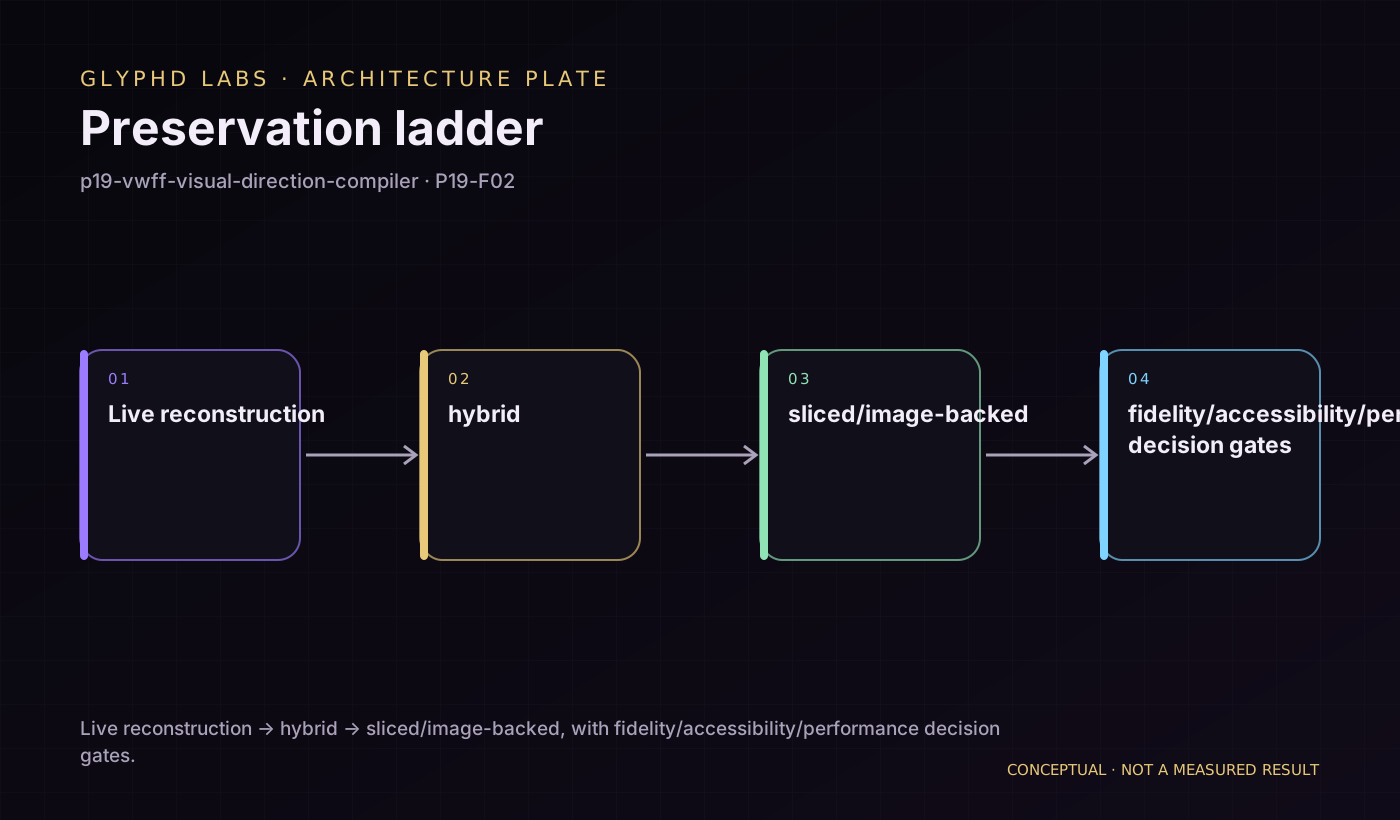
4. Preservation ladder
When a source image is the final intended design, preserve it before reinterpretation.
Level 1 — live reconstruction
Use HTML, CSS, SVG, fonts, gradients, layout, and components when fidelity remains high.
Level 2 — hybrid reconstruction
Use live interaction and text with extracted textures, masks, borders, plates, illustrations, or image-backed sections.
Level 3 — sliced or image-backed preservation
Retain complex visual regions as assets when code reconstruction would visibly weaken the match. Add semantic overlays, accessibility, and responsive behavior around them.
The architecture does not fetishize implementation purity. It optimizes for working fidelity, accessibility, maintainability, and performance together.
5. Visual Direction Compiler
The compiler transforms the approved visual state into a production envelope.
ProductionEnvelope {
  objective
  target_surface_or_shot
  exact_references[]
  reference_order
  locks[]
  flexible_regions[]
  layout_or_camera
  aspect
  responsive_rules
  asset_roles[]
  text_content
  negative_constraints[]
  implementation_or_provider_lane
  cost_estimate?
  review_rubric[]
  expected_return
}
The envelope is deterministic for a given version of the Visual World and compiler.
The compiler may use a model to interpret loose direction, but the output must validate.
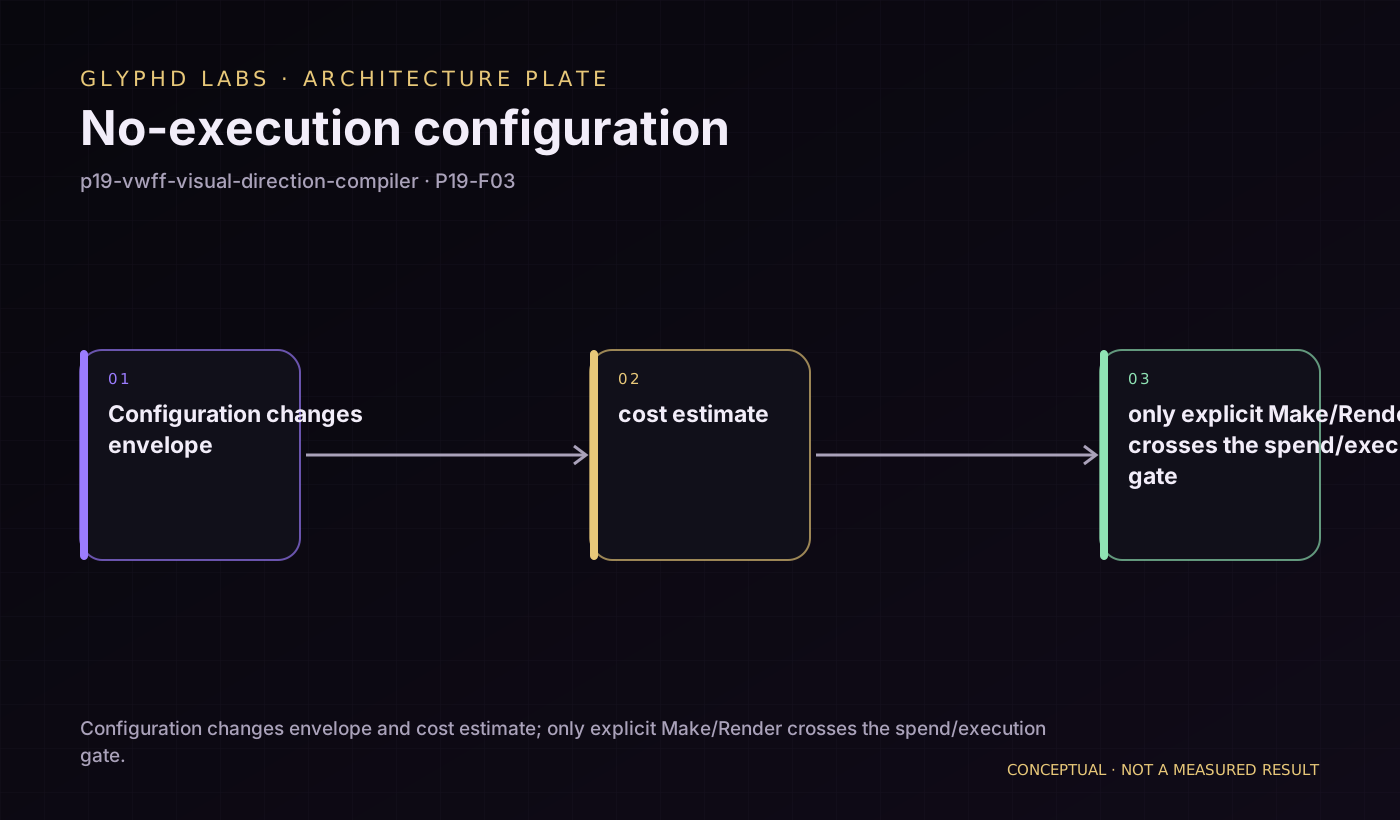
6. No-execution configuration
Configuration and execution are separate.
user configures
→ compiler generates frozen envelope
→ user reviews
→ explicit Make/Render action
→ provider or builder executes
Changing a model, quality, duration, reference, or lock updates the estimate and envelope. It does not automatically spend credits or overwrite assets.
This is critical for generative media and coding agents.
7. Image-first production
For video and complex interfaces, the visual plan comes before motion or implementation.
A production sequence can be:
visual bible
→ character/object references
→ timestamped scene list
→ storyboard
→ keyframes
→ continuity review
→ animation/render plan
→ approval
→ render
→ review
→ repair packet
The rule is:
Do not just output prompts. Output production packets.
A packet includes reference order, asset map, shot beats, camera rules, sound posture, negative constraints, cost, and review criteria.
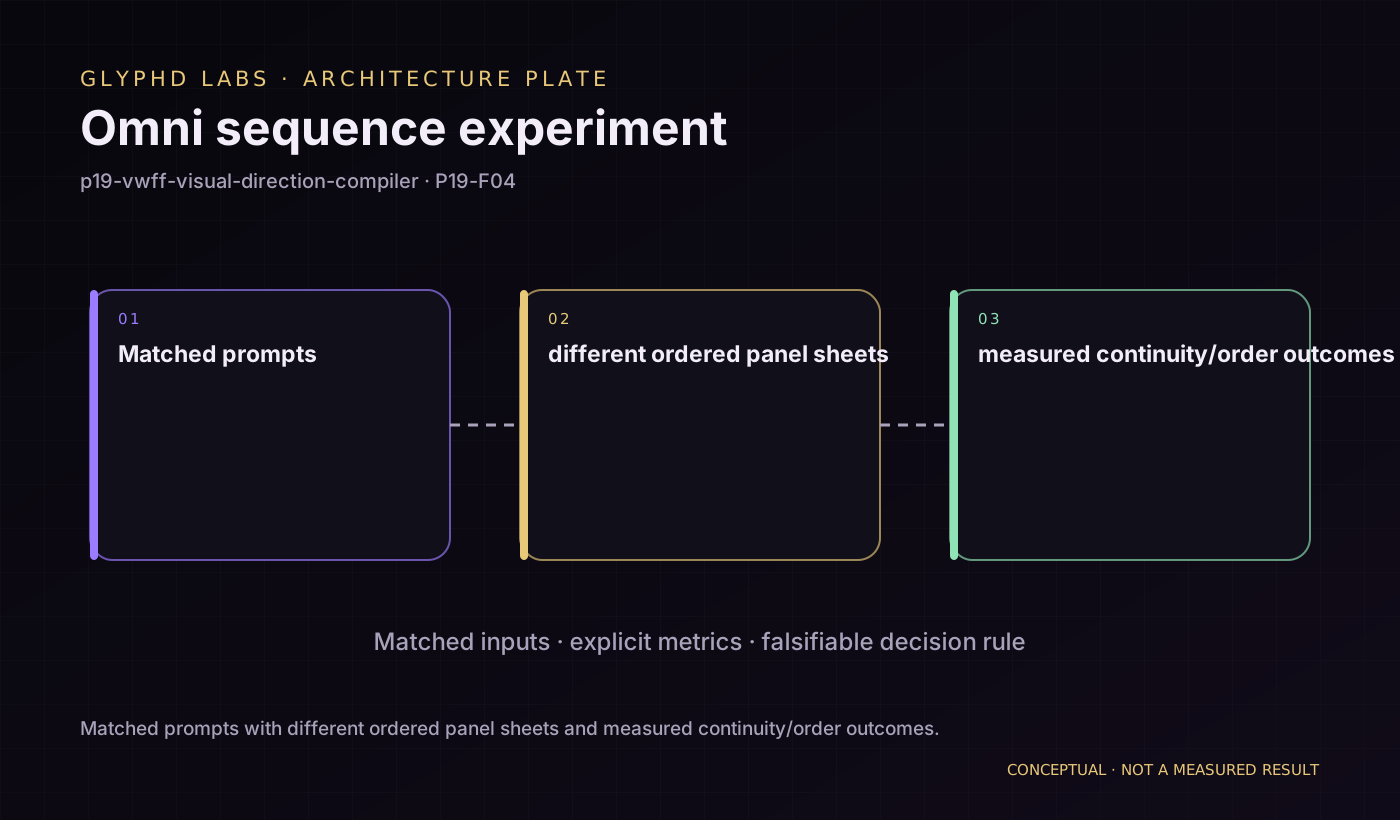
8. Omni sequence sheets
A sequence sheet can place ordered visual states on one 16:9 reference.
The test keeps subject and prompt constant and changes:
- number of panels;
- order;
- layout;
- path;
- final landing image.
Observed behavior can reveal whether a video model follows panel order, camera progression, continuity, and no-text constraints.
These sheets are experimental routing artifacts, not proof that a model understands a formal visual language.
9. Returned assets and lineage
A provider Return contains:
asset_ref
provider
model
settings
input_envelope
reference_refs
cost
output_digest
review_results
limitations
The asset remains a candidate until accepted.
Lineage records:
- source references;
- generated variants;
- crops;
- edits;
- repairs;
- responsive derivatives;
- publication;
- rights.
A new asset cannot silently replace the accepted source plate.
10. Visual verification
Verification can include:
- pixel or perceptual diff;
- layout geometry;
- text extraction;
- lock-specific checks;
- identity review;
- responsive screenshots;
- contrast;
- focus and keyboard behavior;
- performance;
- human visual acceptance.
Automated image similarity cannot decide every lock. The contract identifies which checks require the founder or designer.
11. Relationship to software architecture
VWFF does not replace component architecture. It supplies a visual source of truth.
A component can declare:
visual_contract_ref
supported_states
responsive_behavior
asset_dependencies
accessibility_equivalent
visual_regression_fixture
The implementation remains modular, but components cannot drift from the world merely because a framework encourages generic cards.
12. Relationship to ImageOS and production systems
The Visual Direction Compiler can serve:
- ImageOS;
- VideoBoss;
- X-Splora;
- POLYGLYPH A/V;
- website implementation;
- game art;
- industrial design;
- architecture visualization.
Specialist products retain domain logic. The compiler provides shared visual contracts and production envelopes rather than becoming one universal app.
13. Demonstration
A browser demo can:
- show three references with different roles;
- promote one composition to an absolute lock;
- set aspect and responsive crops;
- compile a production envelope;
- compare two returned candidate assets;
- mark violations;
- accept a derivative;
- show lineage and receipt.
No paid generation is required. Fixture assets can prove the contract.
14. Evaluation
Fidelity
- lock violation rate;
- visual diff;
- identity drift;
- layout deviation;
- typography mismatch;
- responsive hierarchy.
Production
- number of regeneration cycles;
- time to accepted asset;
- cost;
- prompt length;
- continuity errors;
- repair specificity.
Human comprehension
- can the director explain what is locked?
- does the builder understand reference roles?
- can a change be made without losing accepted visual state?
- can another provider receive the same envelope?
Compare ordinary prompt folders with compiled envelopes.
15. Security, rights, and ethics
References may contain copyrighted work, real people, brands, or private environments.
The system requires:
- rights metadata;
- consent for likeness use;
- no silent training contribution;
- private/public separation;
- source and influence disclosure where appropriate;
- no embedding secret prompts in public assets;
- safe provider routing;
- removal/revocation;
- no false claim of affiliation.
The compiler cannot “sanitize” rights away through abstraction.
16. Evidence state
The project corpus includes the Visual Mockup Preservation Amendment, brand/source-plate workflows, visual manifests, image-first production prompts, Omni sequence templates, shot-packet systems, and production-skill contracts. These constitute a developed design and workflow architecture.
A unified production compiler with cross-provider benchmark results remains to be completed.
17. Limitations
Locked imagery can constrain responsive design. Sliced assets can harm accessibility or performance. Automated verification may overfit surface similarity. Visual references can contain inconsistencies. Generative providers may ignore envelopes. A highly controlled system can reduce exploration.
The architecture must distinguish exploratory reference from final contract and allow explicit unlocks.
18. Conclusion
Visual direction should not be a pile of inspiration that every downstream model reinterprets.
It should be an inspectable, versioned architecture artifact that compiles into a production envelope and survives provider changes.
The doctrine is:
Preserve the mockup before you reinterpret the mockup.
And the production rule is:
Compile the visual world. Authorize execution separately.
Architecture illustration briefs
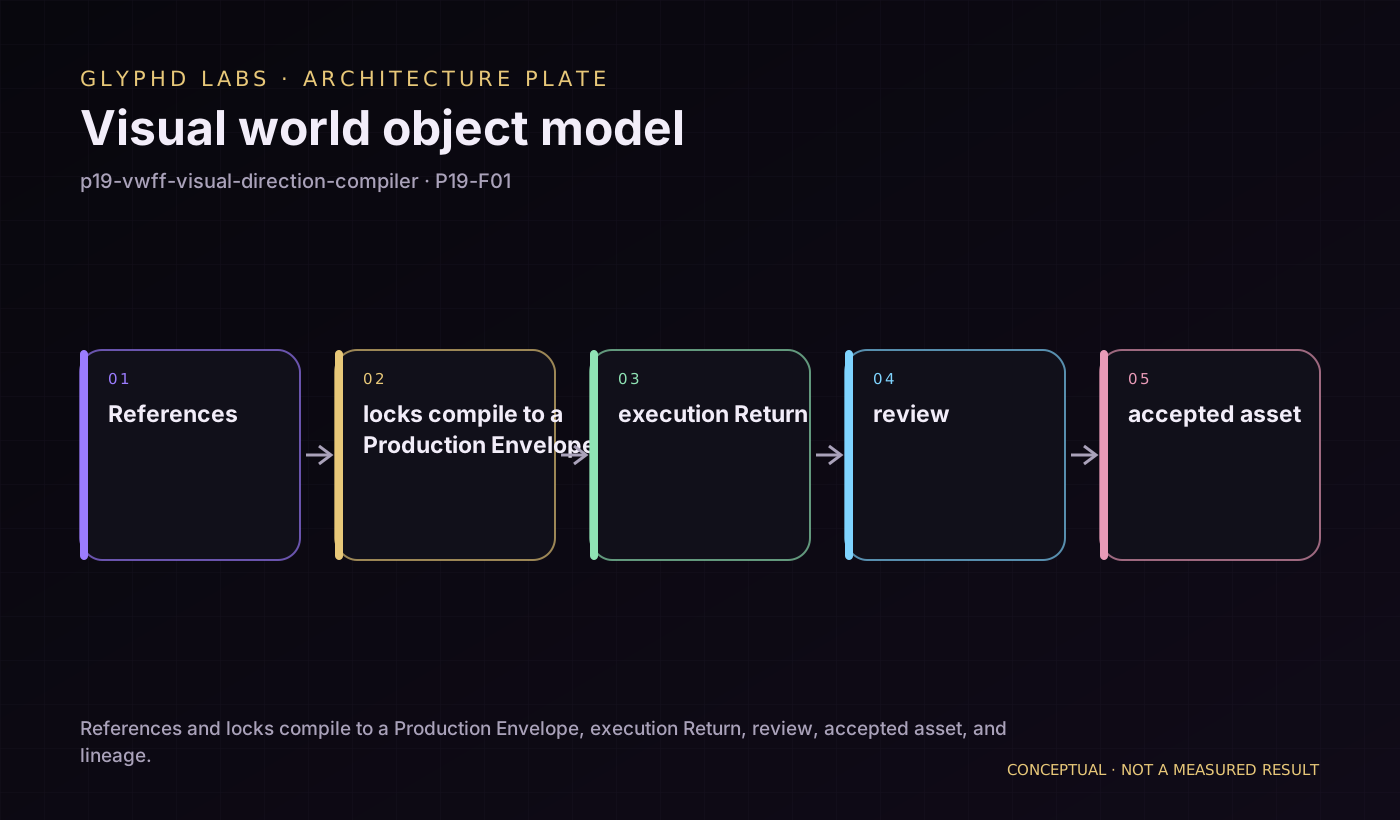
- P19-F01 — Visual world object model: References and locks compile to a Production Envelope, execution Return, review, accepted asset, and lineage.
- P19-F02 — Preservation ladder: Live reconstruction → hybrid → sliced/image-backed, with fidelity/accessibility/performance decision gates.
- P19-F03 — No-execution configuration: Configuration changes envelope and cost estimate; only explicit Make/Render crosses the spend/execution gate.
- P19-F04 — Omni sequence experiment: Matched prompts with different ordered panel sheets and measured continuity/order outcomes.
Source register
- P19-S01 — Visual Mockup Preservation Amendment v2 (2026-06-26).
VISUAL-MOCKUP-PRESERVATION-AMENDMENT-v2.md - P19-S02 — X-Splora Production Skills integration notes (2026-06-30).
Pasted markdown.md - P19-S03 — Seedance/C-Dance Omni Sequence Template Packs (2026-07-01/02).
README.txt - P19-S04 — Glyphd mockups visual provenance and foundry corpus (2026-07).
bohselecta/mockups - P19-S05 — Glyphd/POLYGLYPH audiovisual system canon (2026-07-11).
GLYPHD-ZEKE-CORGIVERSE-v4.0-COMBINED-SPEC.md
Public-disclosure and IP boundary
This edition publishes the public-safe visual contract, preservation doctrine, compiler concept, and evaluation program. It excludes private reference images, third-party copyrighted assets not cleared for publication, confidential provider prompts, and patent-claim language. No provider-specific superiority is claimed.
P19-C01SPECIFIEDVWFF represents references, roles, locks, production envelopes, Returns, verification, and lineage as versioned project objects.
- Unified compiler implementation remains to be receipted.
P19-C02IMPLEMENTEDThe preservation ladder and image-first production packet methods are implemented in multiple project workflows and templates.
- Cross-project consistency should be validated.
P19-C03HYPOTHESISCompiled production envelopes reduce visual drift, regeneration cycles, and cost compared with ordinary prompt folders.
- No accepted comparative study is published.
These provenance records identify sources used by the publication. An internal path is not a public download unless a link is explicitly provided.
P19-S01P19-S02P19-S03P19-S04P19-S05v0.1.0First synthesized public-safe institute edition compiled from the Glyphd project corpus.
This edition publishes the public-safe visual contract, preservation doctrine, compiler concept, and evaluation program. It excludes private reference images, third-party copyrighted assets not cleared for publication, confidential provider prompts, and patent-claim language. No provider-specific superiority is claimed.